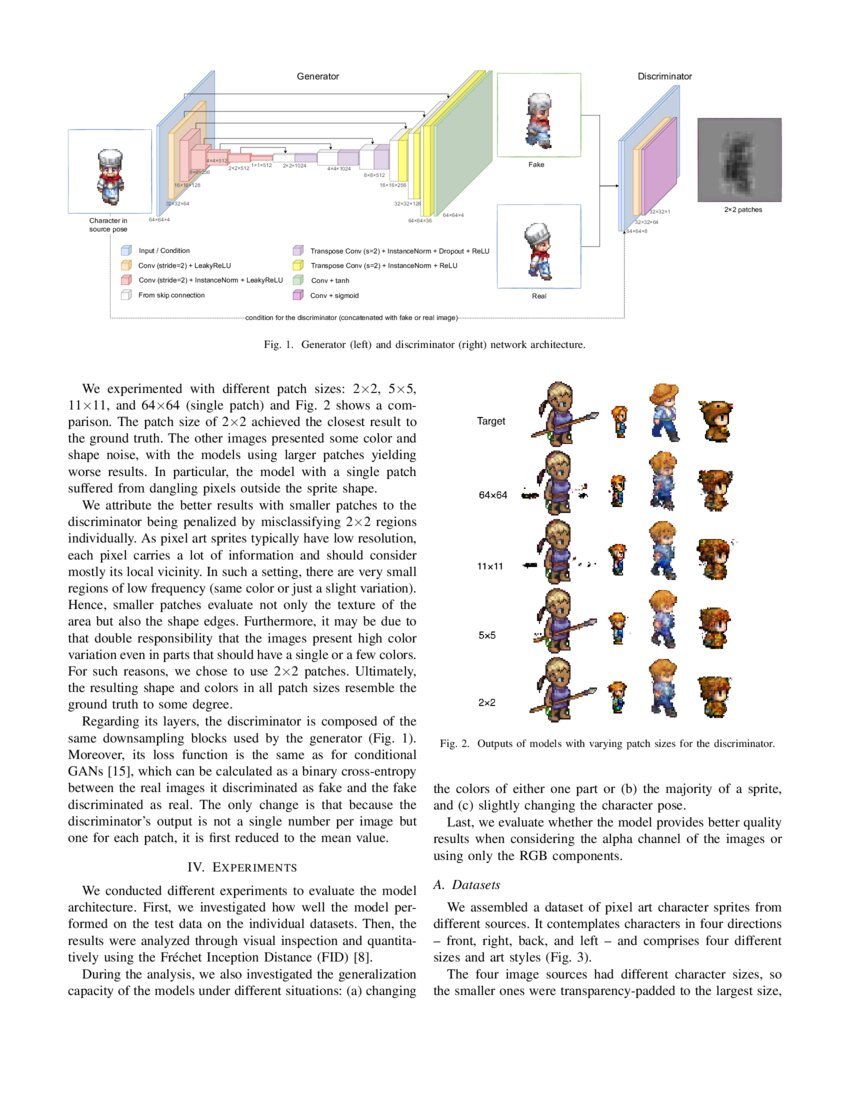
You're ready to bring your game characters to life with that iconic, dynamic JUS (Jump Ultimate Stars) pixel art flair. But instead of meticulously drawing each frame, what if you could harness the power of artificial intelligence to do the heavy lifting? This Step-by-Step Guide: Generating JUS Style Sprites with AI will show you exactly how to transform your creative vision into pixel-perfect reality, making game development more accessible and exciting than ever before.
At a Glance: Your AI Sprite Creation Journey
- Define Your Vision: Clearly outline your character, action, and the distinctive JUS aesthetic in your mind.
- Craft a Precise Prompt: Use descriptive language, specific style keywords (e.g., "16-bit JUS style pixel art," "dynamic pose"), and resolution targets.
- Choose Your AI Tool: Select an AI image generator capable of handling detailed text prompts and producing pixel art.
- Generate and Iterate: Experiment with prompts, regenerate images, and refine until your sprite sheet meets your exact specifications.
- Ensure Consistency: Maintain character uniformity across multiple sprites using careful prompting and, if available, reference images.
- Integrate Seamlessly: Prepare your AI-generated assets for your game engine, understanding frame dimensions and asset naming conventions.
For years, crafting game sprites—those individual images that animate a character or object—was a task reserved for skilled artists. Each jump, run, or attack required precise, frame-by-frame illustration, a time-consuming and often costly endeavor. Then came the era of AI, revolutionizing everything from writing to visual art. Today, powerful text-to-image AI models can generate entire sprite sheets in seconds, opening up a world of possibilities for indie developers, game jam enthusiasts, and aspiring creators.
This guide focuses specifically on generating sprites in the beloved JUS style. Known for its vibrant, action-packed pixel art, often featuring characters from popular manga and anime, the JUS style demands a particular aesthetic. We'll show you how to communicate that distinct look to an AI, ensuring your characters pop with the right blend of nostalgia and modern efficiency.
Why Lean on AI for JUS Sprites?
Traditional sprite creation is an art form, no doubt. But it's also a bottleneck for many projects. Here’s how AI smashes through those barriers, especially when aiming for a specific style like JUS:
- Unmatched Efficiency: Forget hours, days, or even weeks of drawing. AI can spit out dozens of sprite variations in minutes, drastically accelerating your workflow. This means more time spent on game design and less on asset production.
- Serious Cost-Effectiveness: Hiring a pixel artist with JUS style expertise can be expensive. AI tools, often available through subscriptions or even free tiers, eliminate this overhead, making game development accessible on a shoestring budget.
- Pixel-Perfect Consistency: Maintaining uniform quality and style across an entire sprite sheet, especially for complex animations, is incredibly challenging. AI, when prompted correctly, can ensure every frame adheres to the same stylistic rules, preventing jarring inconsistencies.
- Boundless Creative Freedom: Your imagination is the only limit. Detailed text prompts allow you to experiment with countless character designs, actions, and stylistic nuances. Want a "flame-haired samurai doing an aerial kick" in JUS style? Just ask.
- True Accessibility: No coding experience? No artistic background? No problem. AI empowers anyone with an idea to bring professional-looking game visuals to life, democratizing game creation in a powerful way.
Deconstructing the JUS Style: What AI Needs to Know
Before you even touch an AI generator, understand what makes the JUS style unique. This isn't just about "pixel art"; it's a specific flavor:
- Resolution and Detail: JUS sprites typically exist in a sweet spot of resolution, often around 32x32 pixels to 64x64 pixels per character frame. This resolution allows for recognizable detail, dynamic poses, and vibrant colors without becoming overly complex or "chunky."
- Anime/Manga Aesthetics: Characters often have exaggerated features, expressive faces, and dynamic, action-oriented poses typical of Japanese animation and comics. Think bold outlines, sharp angles, and energetic movements.
- Vibrant Color Palettes: JUS games are known for their bright, punchy colors that make characters stand out against backgrounds. Avoid muted or overly complex color schemes in your descriptions.
- Action-Oriented Posing: Sprites are designed for combat and movement. An idle pose should still convey readiness, while attack animations should feel impactful and fluid, even with limited frames.
- Perspective: Most JUS sprites are side-view, often with a slight isometric lean, providing a clear profile for fighting game mechanics.
When you craft your prompts, these characteristics need to be explicitly or implicitly woven in.
The AI Sprite Generation Workflow: From Concept to Combat-Ready
Here's your practical, step-by-step guide to generating JUS style sprites using AI.
Step 1: Crafting the Perfect JUS-Style Prompt
This is where the magic starts. Your prompt is the AI's instruction manual, so precision is paramount.
A. Define Your Character and Action
Start with the basics. Who or what is your sprite? What are they doing?
- Character: "A male ninja," "a blue slime creature," "a female knight with golden armor."
- Action: "Running forward," "charging a spell," "idle stance," "performing a high kick," "jumping."
- Emotion/Expression: "Angry," "smiling," "determined."
B. Inject the JUS Style Keywords
This is crucial for getting the desired aesthetic. Combine general pixel art terms with JUS specifics.
- Core Style: "JUS style pixel art," "16-bit pixel art," "retro fighting game sprite," "anime pixel art style."
- Resolution/Detail: "Detailed pixel art," "crisp pixel lines," "vibrant colors." (You might specify actual dimensions later if your tool allows, but for the initial prompt, these help).
- Specific Elements: "Bold black outlines," "dynamic pose," "shadows and highlights."
C. Specify Sprite Sheet Requirements (If Applicable)
If you need an animation, clearly state the number of frames and their arrangement.
- "Sprite sheet of a character," "animation frames," "4 frames horizontally."
D. Putting It Together: Example Prompts
Let's look at some effective JUS-style prompts:
- "JUS style pixel art sprite sheet of a male ninja, in a dynamic running pose, with 4 animation frames, side view, vibrant colors, bold outlines, 32x32 pixel character."
- "16-bit JUS style pixel art character, female knight with golden armor, standing in a confident idle pose, detailed pixel art, high contrast, perfect for a fighting game, transparent background."
- "Anime pixel art sprite, blue slime creature, hopping and smiling, 3 frames animation, JUS aesthetic, small creature, 24x24 pixels."
Pro-Tip for Prompts: Always begin with the style first, then the subject, then the action, and finally any specific details. This hierarchical structure often helps the AI prioritize the core artistic direction.
Step 2: Choosing Your AI Generator
While many AI image generators exist, not all are equally adept at pixel art or sprite sheets.
- ChatGPT's Image Model (DALL-E 3): Excellent for understanding complex prompts and generating detailed pixel art. Good for initial character concepts and simple animations.
- Pixelcut's AI Sprite Generator: Specifically designed for sprites, it often has features tailored for animation frames and consistent output.
- Other Text-to-Image Models (Midjourney, Stable Diffusion): With the right parameters and custom models/LoRAs, these can also produce stunning pixel art. However, they might require more fine-tuning to consistently hit the "JUS style" aesthetic without specific training on it.
For this guide, we'll assume a general AI image generation model, but the principles apply broadly.
Step 3: Generating and Iterating
Submit your meticulously crafted prompt to your chosen AI tool.
- Initial Generation: The AI will process your request and present you with several options.
- Review Critically:
- Does it capture the JUS style? Are the colors vibrant? Are the outlines distinct?
- Is the character consistent across frames (if a sprite sheet)?
- Are the poses dynamic and appropriate for the action?
- Is the resolution roughly what you envisioned?
- Refine Your Prompt: This is where iteration comes in. Don't be afraid to adjust.
- Too blurry? Add "crisp pixel art," "sharp lines."
- Not JUS enough? Emphasize "JUS aesthetic," "retro fighting game sprite," "anime character proportions."
- Pose isn't right? Describe the action more vividly: "mid-air kick with leg fully extended," "leaning forward aggressively."
- Color issues? Specify "bright blue tunic," "vibrant red scarf."
- Too few frames? Adjust your "X animation frames" count.
- Missing details? Add "wearing a headband," "holding a katana."
Key to Iteration: Make small, incremental changes to your prompt and regenerate. Observe how each change affects the output. This trial-and-error process quickly builds your intuition for effective prompting.
Step 4: Maintaining Character Consistency Across Sprites
One of the biggest challenges in sprite creation is keeping your character looking the same across different animations. AI makes this easier, but it still requires a strategic approach.
- Exact Same Keywords: For every pose or action of a single character, use the exact same descriptive keywords for core attributes.
- Instead of "blue armor" in one prompt and "sapphire plates" in another, stick to "bright blue fantasy armor" every time.
- Hair color, style, clothing details, accessories – keep them identical in your phrasing.
- Reference Images (If Supported): Some advanced AI tools allow you to upload a reference image. Generate your character's idle pose first, then use that image as a visual anchor when generating subsequent action sprites. This helps the AI maintain the character's core design.
- Seed Values: Certain AI models generate images based on a "seed" number. If your tool provides this, using the same seed value (along with consistent prompts) can sometimes help maintain visual continuity when generating a series of images.
- Generative AI with ControlNet-like features: More advanced setups (often in Stable Diffusion) allow for greater control over pose and composition while maintaining character identity. While potentially more complex, these offer unparalleled consistency.
Step 5: Downloading and Preparing Your Sprites
Once satisfied, download your generated assets.
- Format: Always aim for high-resolution, watermark-free PNG files. PNG supports transparency, which is essential for sprites that need to overlay game backgrounds without a white box around them.
- Post-processing:
- Cropping: You might need to crop individual frames from a generated sprite sheet.
- Resizing: Ensure frames are consistently sized (e.g., all 32x32 pixels).
- Transparency: If the AI didn't provide a transparent background, you might need to use an image editor (like GIMP, Photoshop, or even online tools) to remove the background. Many AI tools now offer background removal features as well.
- Minor Edits: Occasionally, a few stray pixels or a minor imperfection might need a quick touch-up in a pixel art editor. Don't be afraid to make small manual adjustments to perfect your AI-generated art.
Integrating AI-Generated Sprites into Your Game Engine
Getting your shiny new JUS sprites into a functional game is the next big step. Let's look at a specific example using Rosebud AI, and then discuss general principles.
Rosebud AI Integration
Rosebud AI is a platform designed to make game creation more accessible, often leveraging AI itself. Here's how your AI-generated sprite sheets fit in:
- Start a New Project: Open Rosebud and create a fresh project.
- Upload Your Asset: Navigate to the "Asset Tab" within Rosebud. Upload your AI-generated JUS style sprite sheet (as a PNG). Give it a clear, memorable name.
- Prompt Rosebud's AI ("Rosie"): Once uploaded, you'll communicate with Rosebud's AI, Rosie, to define how the sprite sheet should be interpreted. You'll need to provide:
- Character Name: What is this character called? (e.g., "Our Hero")
- Frame Count: How many individual animation frames are there in your sprite sheet? (e.g., "4 frames horizontally")
- Frame Dimensions: What are the dimensions of each individual frame? (e.g., "32x32 pixels with no padding")
- Asset Name: Crucially, reference your uploaded asset using the "@" symbol, like "@your_asset_name."
Example Prompt for Rosie:
"Create a new character named 'Sparky.' Use the sprite sheet @sparky_run. This sprite sheet has 4 frames horizontally, each frame is 32x32 pixels with no padding. This animation shows Sparky running."
Rosebud's AI will then process this information, segmenting your sprite sheet into individual frames and associating them with animations, ready for use in your game logic.
General Game Engine Integration (Unity, Godot, GameMaker, etc.)
For other engines, the process is similar:
- Import: Import your sprite sheet PNG into your game project.
- Slice/Splice: Most engines have a tool to "slice" a sprite sheet into individual frames based on a grid. You'll specify the frame width, height, and any padding between frames.
- Create Animations: Define animation clips using the sliced frames. For a JUS-style run animation, you'd select the 4 running frames, set their playback speed, and loop them.
- Assign to Character: Attach these animation clips to your character's game object or entity, often controlled by an "Animator" or "Animation Player" component.
- Code for Control: Write scripts that trigger different animations based on player input or game state (e.g., press right arrow key, play "run" animation; press spacebar, play "jump" animation).
Beyond the Basics: Advanced Tips for AI Sprite Generation
You've got the fundamentals down. Now, let's explore ways to push your AI sprite creation further.
Fine-Tuning Resolution and Detail
While you can specify "32x32 pixels" in a prompt, many AIs generate higher-resolution images and then downscale. To truly control the pixel density:
- Generate High, Downscale Smart: Generate a slightly larger image (e.g., 128x128 pixels for a 32x32 target). Then, use a dedicated pixel art editor (like Aseprite) to downscale it using "nearest neighbor" resampling. This preserves the crisp pixel blocks without introducing blur.
- Prompt for "Low Resolution" or "Game Boy Style": Sometimes, prompting for lower fidelity can trick the AI into producing more distinct pixel art, even if the output resolution is still higher. You'll still need to downscale.
Handling Transparency and Backgrounds
A sprite needs a transparent background to blend seamlessly into your game.
- Explicitly Prompt for Transparency: Always include "transparent background" or "no background" in your prompts.
- AI Tool Features: Many modern AI image generators offer a "remove background" feature after generation. Utilize this.
- External Tools: If AI fails, use tools like remove.bg, Photoshop's magic wand, or GIMP's fuzzy select to manually remove backgrounds. This is a common, quick post-processing step.
Iterating for Emotional Range and VFX
Don't just stop at basic actions. AI can help you add depth.
- Facial Expressions: "Furious expression," "determined glare," "wincing in pain" can add personality.
- Simple VFX: While complex VFX might be better done traditionally or with dedicated VFX tools, simple effects like "small smoke cloud at feet," "sparkle effect around hands," or "energy aura" can sometimes be incorporated into sprite frames via careful prompting.
Common Pitfalls and How to Avoid Them
Even with AI, things can go awry.
- "Mushed" Pixels: If your pixel art looks blurry or indistinct, your AI might be struggling with the style.
- Solution: Re-emphasize "crisp pixel art," "sharp lines," "no anti-aliasing." Try downscaling from a higher-resolution AI output using nearest-neighbor resampling.
- Inconsistent Character Details: One arm is suddenly longer, or the sword hilt changes design.
- Solution: Strict adherence to consistent keywords. Use reference images. Break down complex characters into simpler elements if the AI struggles with the whole.
- Wrong Perspective/Angle: Your character is side-view in one frame, then slightly front-facing in another.
- Solution: Be explicit: "strict side-view," "profile view," "2D flat view."
- Too Many Frames, Bad Flow: If you ask for too many frames, the AI might generate awkward transitions.
- Solution: Start with fewer frames (3-4) for core actions. Master those, then slowly increase. Sometimes, a few manually edited "in-between" frames (tweening) can smooth out an AI animation.
- Copyright Concerns: Always be mindful of the terms of service of the AI tool you use regarding commercial use and intellectual property. Generally, AI-generated art is yours, but check for specific restrictions.
Where Can AI-Generated JUS Sprites Shine?
The applications for this technology are vast and exciting:
- Indie Game Development: AI is a game-changer for small teams or solo developers, allowing them to produce professional-looking assets without a huge art budget.
- Game Jam Prototyping: Need a playable character and animations in a weekend? AI lets you focus on mechanics, not drawing.
- Character Concepting: Quickly visualize various designs and actions for a character before committing to a final look. An AI Jus sprite generator can be invaluable for rapid iteration here.
- Pixel Art Projects: Beyond games, AI can assist in creating pixel art for digital illustrations, web assets, or even animated GIFs.
- Custom Avatar Creation: Craft unique, JUS-style avatars for profiles, forums, or online personas.
Your Next Steps: From Reader to Creator
You now have a comprehensive understanding of how to leverage AI to generate stunning, JUS-style sprites. The tools are accessible, the process is iterative, and the potential is boundless.
Your mission now is to experiment. Pick an AI tool, craft a detailed prompt, and don't be afraid to iterate. Start with a simple character and a basic action. Observe how the AI responds, adjust your language, and watch your pixel art come to life. The more you practice, the better you'll become at coaxing exactly what you envision out of the machine. The era of effortless, stylish sprite generation is here—it's time to build your pixelated dream world.